Frozen Food Packaging
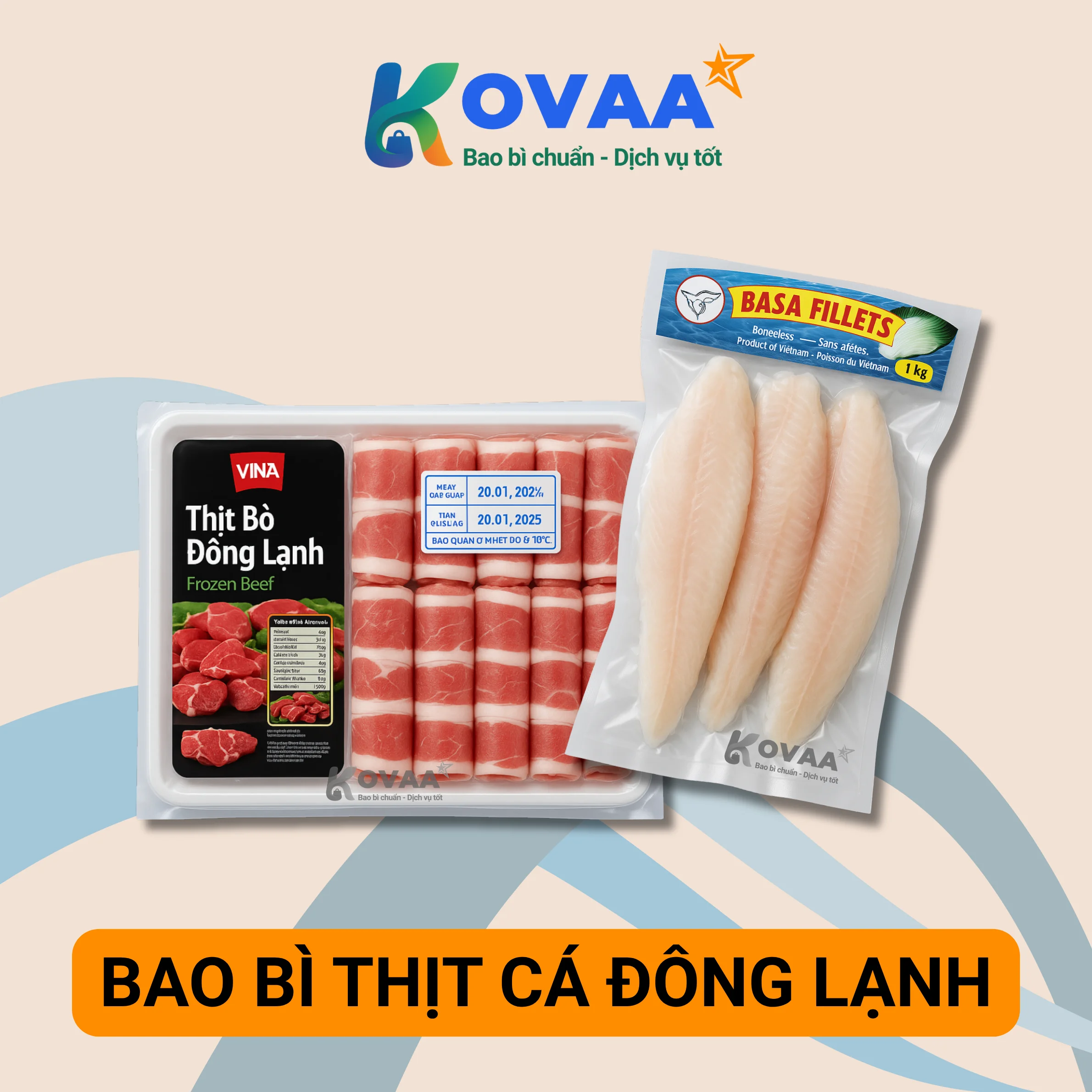
Frozen goods packaging is used for meat, fish, seafood and fish balls. It must withstand freezer temperatures without becoming brittle or cracking, be airtight and waterproof, and be tough enough not to puncture in transport.
PA/PE laminated vacuum pouches are the common choice: the PA layer is flexible, puncture resistant and cold resistant, while the PE layer resists moisture and seals tightly. Export seafood and premium frozen goods use multi-layer films such as PET/PA/PE, PET/AL/PA/PE and PET/MPET/PE for oxidation protection. Pouches can be made as side-sealed, back-seal, four-side seal or zipper pouches, or supplied as film rolls.
The packaging can be gravure printed with the logo, ingredients, production date, expiry date and barcode. The KOVAA catalogue lists ISO 22000 and HACCP certification for food applications. Send the product, pack format and expected volume via Zalo or the Contact page for a KOVAA quote.
Frozen Meat and Fish Packaging
View product details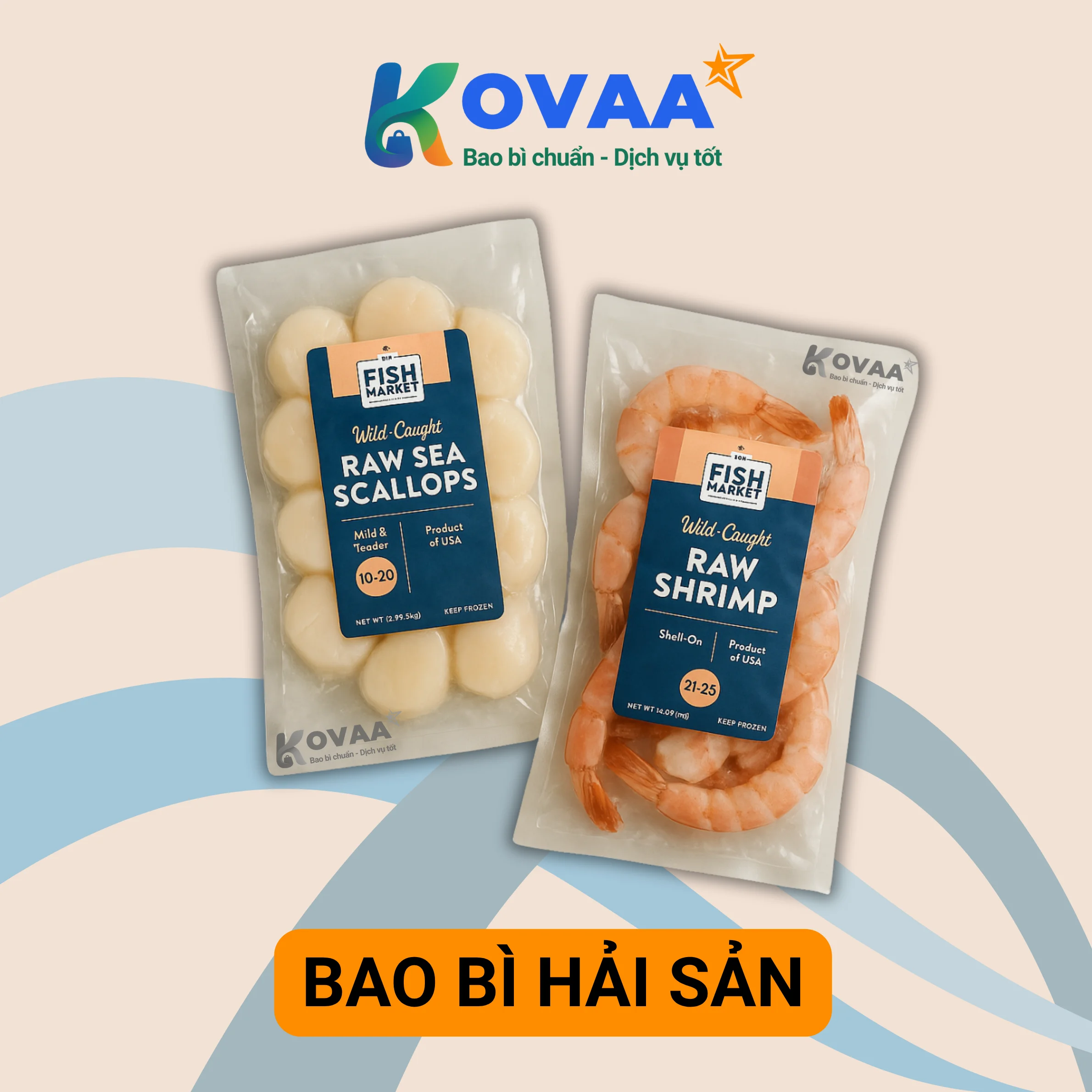
Seafood Packaging
View product details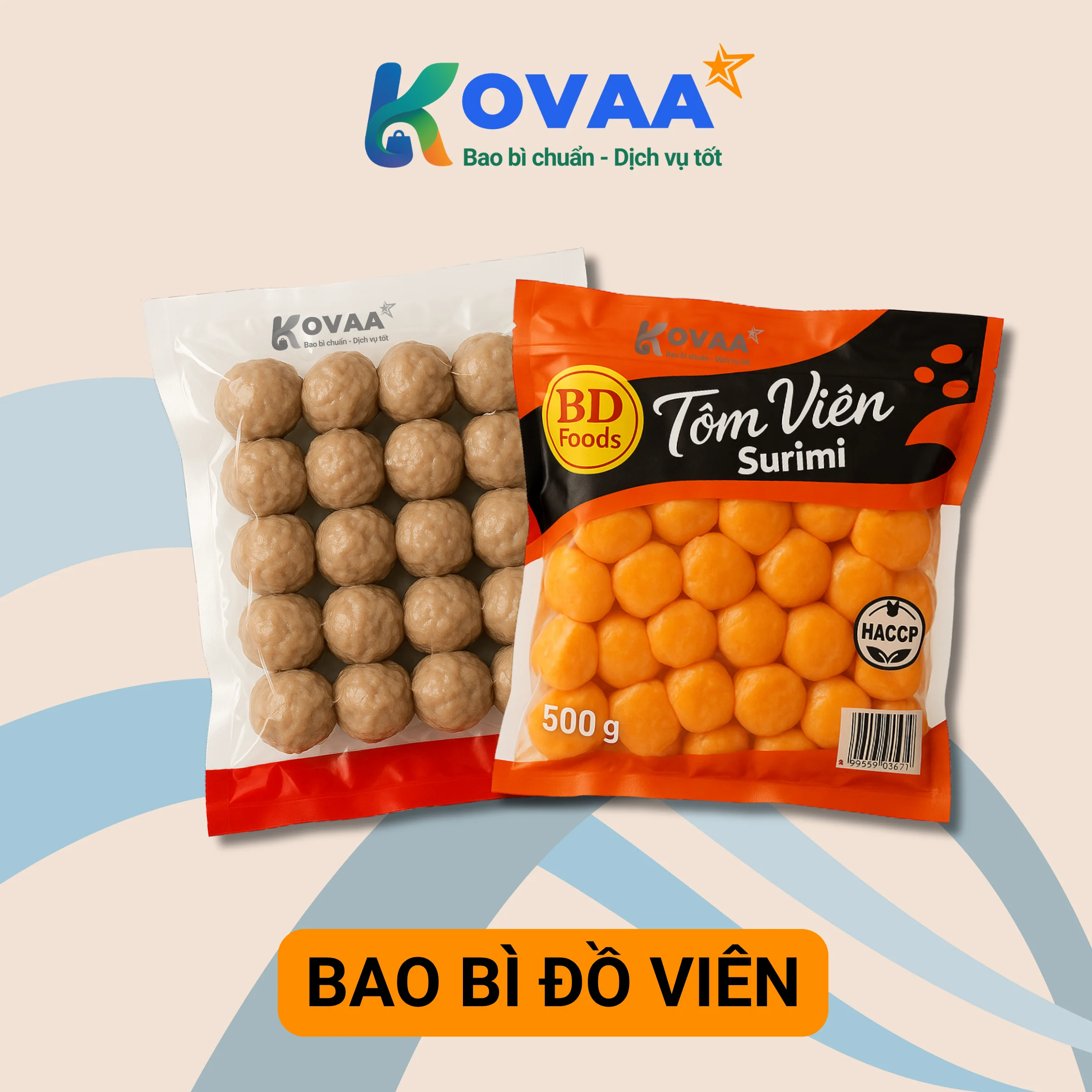
Fish Ball Packaging
View product details
Frequently Asked Questions
- What must frozen meat, fish and seafood packaging provide?
- The packaging must withstand low cold-store temperatures without cracking, be airtight and waterproof, and limit the entry of bacteria and mould. The surface should clearly show the origin, production date, expiry date and storage instructions.
- Why are PA/PE vacuum pouches commonly used for frozen goods?
- PA (nylon) film is tough, abrasion resistant, puncture resistant and handles cold well; PE film resists moisture and makes strong seals. With the air drawn out, the pouch limits oxidation and moisture loss and is more compact to store and ship.
- Which packaging suits export seafood?
- Export goods should use multi-layer laminates with AL or MPET to prevent oxidation, for example PET/AL/PA/PE or PET/MPET/PE, combined with vacuum packing for processed products. The exact structure is chosen for the product and storage conditions.