Introduction
The role of frozen meat and fish packaging
- Optimal preservation: Prevents oxygen, moisture, and bacteria from entering, maintaining quality and natural flavor.
- Extend usage time: Limit oxidation, reduce water loss, and limit freezing of product surface.
- Protects the product during transportation: Prevents impact and deformation, helping the product retain its shape and structure.
- Transparent information: Fully printed packaging with origin, production date, expiration date, and storage instructions to help consumers conveniently choose.
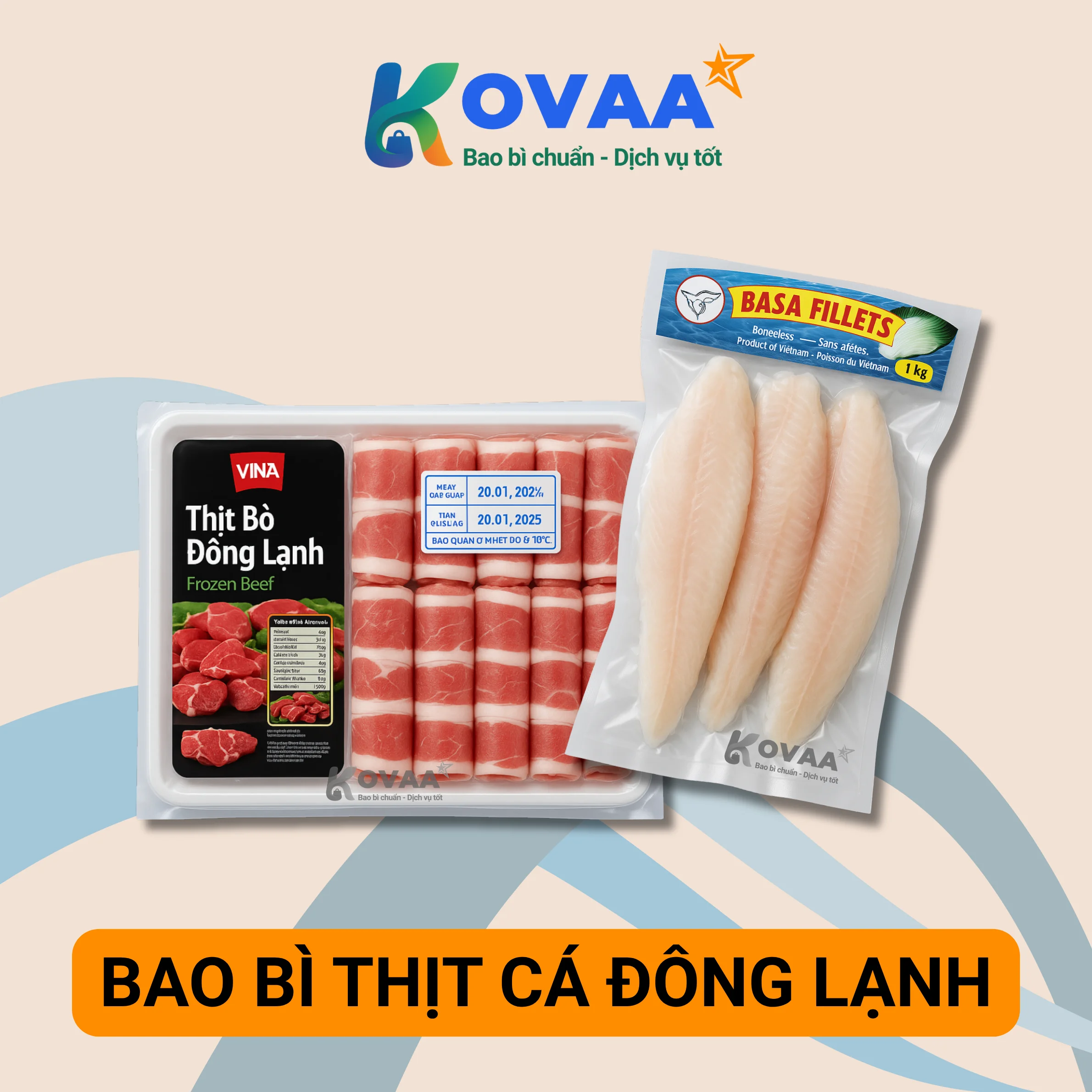
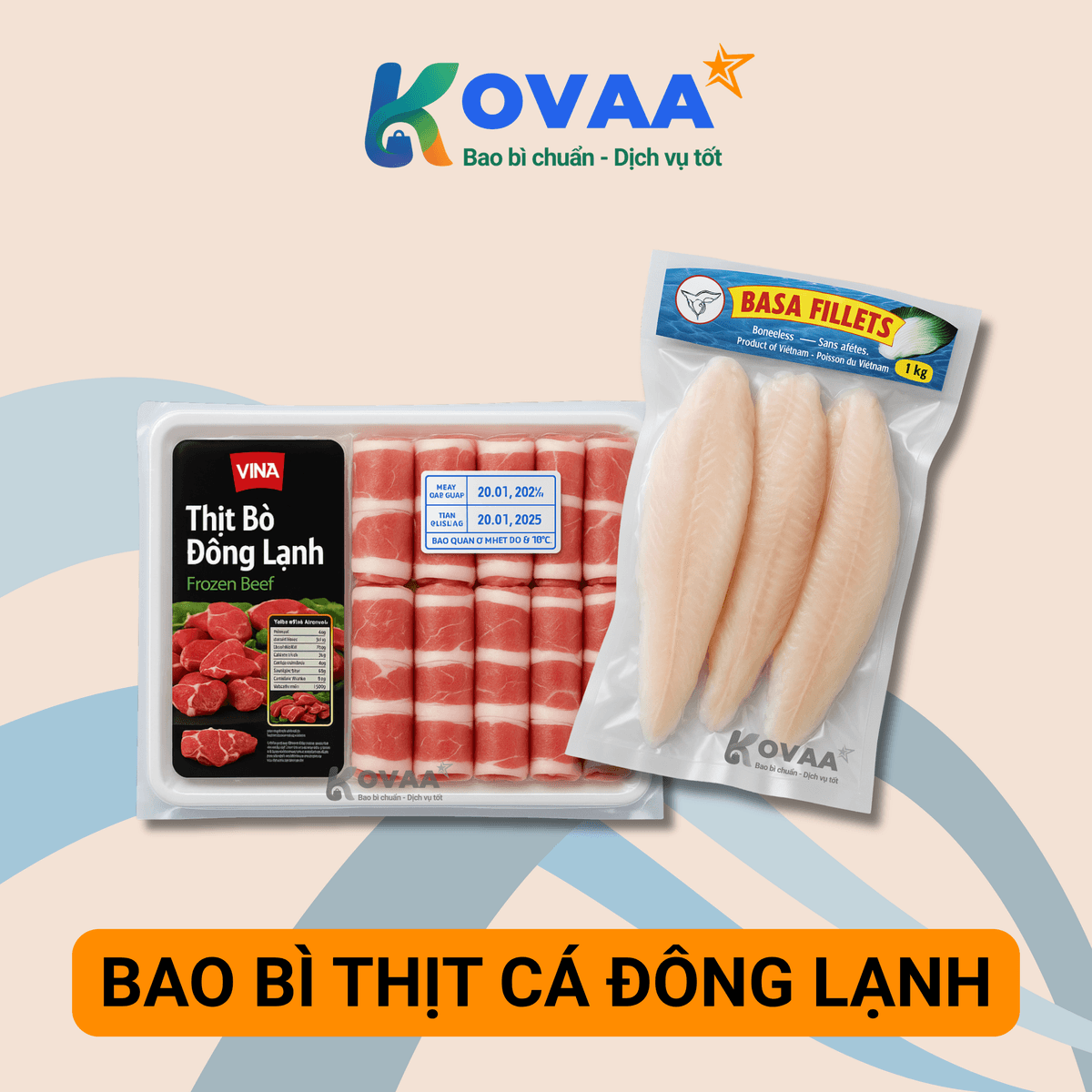 Figure 1: Frozen meat and fish packaging is produced with multi-layer composite films such as PA/PE, ensuring deep cold resistance, gas barrier and maximum food preservation time.
Common types of packaging for frozen meat and fish
- PA/PE vacuum bag
- Structure: 2–3 laminated layer PA (Nylon) – PE (Polyethylene).
- Characteristics: Flexible, airtight, resistant to low freezing temperatures, easy to vacuum and preserve for long periods of time.
- Application: Pork, beef, chicken, fish fillet, seafood fillet, shrimp balls.
- Zipper bag, stand-up bottom bag
- Material: PE, OPP, PET, PA.
- Advantages: Reusable, can be opened and closed many times, suitable for small classification packaging, convenient for restaurants and supermarkets.
- Foam box (EPS), plastic box PET
- Used to transport large quantities, retain heat for a long time during long-distance transportation.
- PVC film shrink packaging
- Wrapping the product helps prevent moisture, increasing aesthetics and product protection.
| Packaging Type | Material | Outstanding Advantages |
|---|---|---|
| Vacuum bag | PA/PE | Airtight, long-lasting, suitable for freezing |
| Zipper bag/standing bottom | PE, PET, OPP, PA | Convenient, easy to open and close, suitable for all types of food |
| Styrofoam box, plastic box | EPS, PET | Preserving and transporting large quantities |
| Shrink film packaging | PVC, shrink film | Prevents steam, increases aesthetics |
Criteria for choosing quality frozen meat and fish packaging
- Resistant to low temperatures: At least -18°C to -40°C, not brittle or cracked.
- Airtight, waterproof, limited ingress of bacteria and mold.
- Easy to print brand, clear product information, highly aesthetic.
- Diverse sizes, suitable designs according to products (pieces of meat, whole fish, fillets...).
Why should you choose frozen food packaging printing at KOVAA?
- KOVAA Packaging Company has a closed production process: Applying modern printing technology, strict quality control.
- High quality materials: Imported laminated film PA/PE, PET, OPP, safe and meets all food industry standards.
- Professional consulting team: Answer and propose appropriate solutions for each product and business model.
- Diverse designs: Satisfy both domestic and export orders, customized upon request.
- Competitive prices, flexible and fast nationwide delivery.
- After-sales policy: Free consultation and technical support.
Frequently Asked Questions
- Where to buy frozen meat and fish packaging?
- You can buy at reputable, professional packaging manufacturing companies like KOVAA for design advice, custom orders or custom packaging printing factories to ensure food hygiene and safety.
- How much does frozen food packaging cost?
Unit price depends on structure, size, number of print colours, finishing details and volume; the larger the volume, the more competitive the unit price. Send your specifications via Zalo or the contact page for a KOVAA quote.
- Which material is suitable for frozen meat and fish packaging?
- It is recommended to use PA/PE vacuum sealer, multi-layer laminated film, PET plastic box or EPS foam box.